Retro Groovy Pink 1 Digital Paper: A Practical Review for Designers and Creators
In the competitive landscape of digital design and print-on-demand services, finding a versatile background asset that balances aesthetic appeal with technical precision is essential. The Retro Groovy Pink 1 Digital Paper emerges as a specific resource aimed at professionals and hobbyists alike who require high-quality textures for various applications. This review examines the utility, specifications, and practical implementation of this digital asset, offering an objective analysis for those considering it for their workflow.
Understanding the Asset and Its Core Characteristics
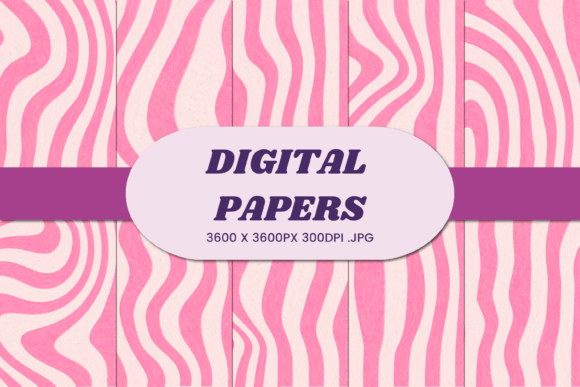
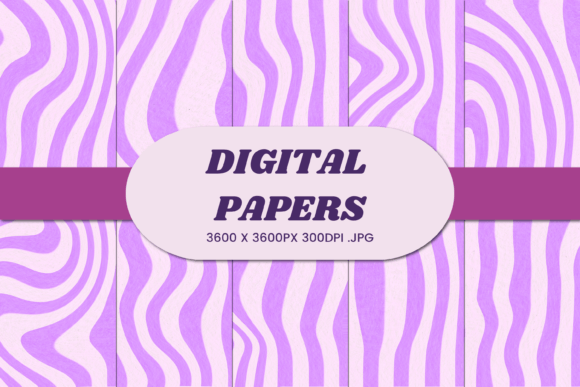
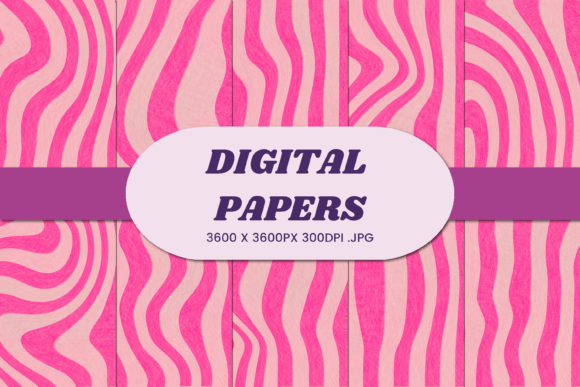
The Retro Groovy Pink 1 Digital Paper is not merely a color fill; it is a textured digital background designed to evoke a specific mid-century modern or psychedelic-inspired aesthetic through its pink tonal palette. For designers, "digital paper" refers to a seamless or standalone texture file used as a base layer in graphic composition. This particular asset is engineered to provide depth and visual interest without overwhelming the primary subject matter, making it suitable for both subtle backgrounds and bold statement pieces.
The file package includes ten distinct JPG variations. This variety allows users to select the exact shade or pattern density that aligns with their brand identity or project requirements. Each file is provided in a high-resolution format of 3600×3600 pixels, which corresponds to a physical size of 12x12 inches at 300 DPI (dots per inch). This resolution is the industry standard for professional printing, ensuring that the asset remains crisp whether scaled down for web use or printed large for wall art and packaging.
Technical Specifications and Quality Analysis
When evaluating digital assets, technical specifications are the first indicator of potential usability. The 300 DPI resolution of the Retro Groovy Pink 1 Digital Paper ensures that fine details in the texture are preserved during the printing process. This is particularly critical for sublimation projects, where ink is transferred onto substrates under heat and pressure. Lower-resolution files often result in pixelation or blurry edges when enlarged, but the dimensions provided here offer sufficient data integrity for most commercial prints.
The inclusion of ten JPG files suggests a curated selection rather than a random assortment. Users can expect consistency in style across the set, allowing for cohesive branding across multiple products. However, because these are raster images (JPG) rather than vector graphics (SVG or AI), they cannot be infinitely scaled without loss of quality. While 3600 pixels is ample for most T-shirt transfers, book covers, and social media graphics, it may fall short for extremely large format prints such as billboards or building wraps unless tiled seamlessly—a feature that would need to be verified by the user depending on the specific source file structure.
Practical Applications Across Industries
The versatility of the Retro Groovy Pink 1 Digital Paper lies in its broad applicability across various creative industries. Below is an analysis of how this asset performs in common use cases:
- Apparel and Accessories: For T-shirt designers, the high contrast and vibrant pink tones work well with screen printing and direct-to-garment (DTG) methods. The texture adds a tactile feel to the visual design, making garments stand out. Similarly, for phone cases and pillows, the pattern serves as an engaging backdrop that complements central logos or typography.
- Print-on-Demand Products: Items such as mugs, blankets, and 3D sublimation tumbler wraps benefit from the seamless nature of digital papers. The 12x12 inch square format is ideal for wrapping around cylindrical objects like tumblers, provided the image is cropped or repeated correctly. The 300 DPI specification ensures that the gradient and texture details remain smooth on curved surfaces.
- Stationery and Corporate Identity: Small business owners and freelancers can utilize this digital paper for business cards, invitations, and product packaging. The retro aesthetic appeals to a niche market interested in vintage styles, while the professional resolution ensures that text remains legible and sharp. It is also effective for scrapbooking and craft projects, where the tactile quality of printed paper is desired.
- Digital Media and Branding: In the realm of social media marketing, the Retro Groovy Pink 1 Digital Paper can serve as a consistent background for post templates, story highlights, or blog headers. Its visual weight helps capture attention in crowded feeds. Additionally, it can be used as a wallpaper or texture overlay in 3D modeling software to add realism to renders.
Evaluating Usability and Workflow Integration
For professionals, ease of integration into existing workflows is paramount. The JPG format is universally compatible with major design software, including Adobe Photoshop, Illustrator, Canva, and GIMP. This compatibility reduces friction, allowing designers to drag and drop the asset into their projects without needing specialized plugins or converters.
The 3600×3600 pixel dimension offers flexibility in cropping. Designers can extract specific sections of the texture to create custom patterns or focus on areas with preferred color gradients. This modularity is valuable for creating unique product designs without purchasing multiple separate assets. Furthermore, the file size is manageable for most storage needs, facilitating quick downloads and easy sharing among team members.
However, users should be mindful of the raster nature of the files. If a project requires the texture to be adjusted non-destructively—for instance, changing the hue or saturation extensively—working with layers and adjustment masks in editing software is recommended. Directly altering the pixel data can lead to artifacts if overdone. Therefore, maintaining a backup of the original Retro Groovy Pink 1 Digital Paper files is a prudent practice.
Audience Fit and Strategic Value
Who benefits most from this asset? The Retro Groovy Pink 1 Digital Paper is particularly suited for:
- Entrepreneurs and Small Business Owners: Those launching brands with a retro, feminine, or playful aesthetic will find this asset cost-effective and visually striking. It eliminates the need to commission custom illustrations for every product variation.
- Freelance Graphic Designers: Designers looking to expand their portfolio with ready-made textures can integrate this into client proposals for packaging or branding. It saves time on background creation, allowing more focus on layout and typography.
- Hobbyists and Crafters: Individuals engaged in DIY projects, such as making custom gifts or decorating homes, appreciate the high quality and ease of use. The ability to print at home or via local services enhances the accessibility of the asset.
- Educators and Content Creators: Bloggers and educators creating printable worksheets, presentations, or educational materials can use the digital paper to add visual appeal to documents, making learning materials more engaging.
Potential Limitations and Considerations
No asset is without limitations. While the Retro Groovy Pink 1 Digital Paper is robust for many applications, users should consider the following:
- Color Management: Digital colors (RGB) do not always translate perfectly to print (CMYK). Before finalizing any commercial print run, it is advisable to convert the files to CMYK mode and proof them to ensure the pink tones appear as expected on physical media.
- Seamlessness: Unless explicitly stated as a seamless tile, the 12x12 inch image may have visible edges when repeated. Users intending to create all-over prints should test the tiling capability in their design software.
- Niche Appeal: The specific "retro groovy" style may not align with minimalist or corporate brands seeking a neutral, professional look. It is best utilized where a bold, nostalgic aesthetic is desired.
Conclusion
The Retro Groovy Pink 1 Digital Paper stands out as a functional, high-quality resource for a wide array of creative projects. Its combination of high resolution, versatile applications, and distinct aesthetic makes it a valuable addition to the toolkit of designers, entrepreneurs, and hobbyists. By understanding its technical specifications and potential limitations, users can effectively leverage this asset to enhance their visual communications, products, and personal projects. Whether used for sublimation wraps, digital branding, or physical crafts, it offers a reliable foundation for creating polished, professional results.