Evaluating Abstract Line Brown Digital Paper for Professional and Creative Projects
In the rapidly evolving landscape of digital design, selecting the right background assets is critical for establishing brand identity and aesthetic cohesion. Among the myriad options available to designers, print-on-demand creators, and hobbyists, Abstract Line Brown Digital Paper has emerged as a versatile resource. This specific digital asset combines minimalist geometric structures with a warm, earthy color palette, offering a sophisticated backdrop that works across a wide spectrum of applications. For professionals evaluating their toolkits, understanding the specific utility, technical specifications, and comparative advantages of this asset is essential before integrating it into production workflows.
Understanding the Core Characteristics
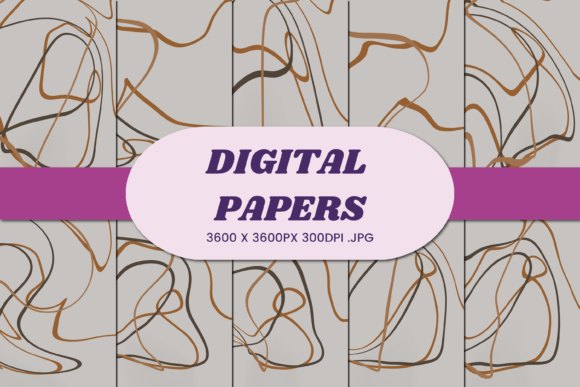
At its foundation, Abstract Line Brown Digital Paper is defined by its visual simplicity and structural elegance. The design typically features clean, linear patterns set against a brown or tan base. This combination creates a sense of organic warmth while maintaining a modern, uncluttered appearance. Unlike busy floral or textured backgrounds that can compete with foreground content, abstract line art serves as a supportive element. It adds depth and interest without overwhelming the primary subject, making it an ideal choice for projects where readability and focus are paramount.
The distinctiveness of this paper lies in its adaptability. The brown hue range—often encompassing tones from light beige to deep chocolate—aligns with current trends in sustainable branding, rustic aesthetics, and minimalist design. These colors evoke feelings of stability, nature, and comfort, which are valuable psychological triggers in marketing materials. When paired with white or black line work, the contrast remains sharp, ensuring that any overlaid text or graphics remain legible. This balance between decorative appeal and functional clarity is what separates high-quality digital papers from generic stock images.
Technical Specifications and File Integrity
For any digital product intended for commercial use or high-quality printing, technical precision is non-negotiable. The Abstract Line Brown Digital Paper package typically includes ten distinct JPG files, each meticulously crafted to meet professional standards. The resolution is a critical factor in this evaluation; these files are provided at 3600×3600 pixels, which translates to a physical size of 12x12 inches at a density of 300 DPI (dots per inch).
This specification is significant for several reasons. First, 300 DPI is the industry standard for crisp, clear printing. Whether the end user is creating a small business card or a large-format poster, starting with a high-resolution source file prevents pixelation and blurring. Second, the square aspect ratio (12x12 inches) offers flexibility. Designers can crop the image to fit various dimensions, such as A4, Letter, or custom social media story sizes, without losing quality. The inclusion of ten variations allows for consistency within a larger project while providing enough variety to prevent visual monotony.
Furthermore, the format is JPG, which ensures broad compatibility with almost all design software, including Adobe Photoshop, Illustrator, Canva, and GIMP. While some advanced users might prefer TIFF or PSD formats for layered editing, the JPG format strikes a practical balance between file size manageability and universal accessibility, particularly for those working on lower-end hardware or collaborating with clients who may not have specialized software.
Diverse Application Scenarios
The versatility of Abstract Line Brown Digital Paper extends far beyond simple desktop wallpapers. Its robust design makes it suitable for a multitude of commercial and personal projects. Understanding these use cases helps potential buyers evaluate whether this asset fits their specific needs.
- Product Packaging and Branding: For businesses selling artisanal goods, such as coffee, tea, or handmade soaps, the earthy tones of this paper align perfectly with natural branding strategies. It can be used as the base for product labels, boxes, or bags, providing a premium look that suggests quality and authenticity.
- Textile and Apparel Design: In the realm of print-on-demand, this pattern works exceptionally well on T-shirts, tote bags, and pillows. The line art holds up well under sublimation processes, retaining its sharpness even when stretched over curved surfaces like tumblers or mugs. For 3D sublimation tumbler wraps, the seamless nature of many abstract designs ensures that the pattern flows continuously around the object.
- Stationery and Invitations: Wedding invitations, thank-you cards, and business cards benefit from the refined elegance of abstract lines. The brown palette offers a sophisticated alternative to traditional black or gray, adding warmth to formal communications. When printed on textured paper stocks, the digital lines complement the physical texture, creating a multi-sensory experience for the recipient.
- Digital Media and Social Content: In the digital space, background texture is key to breaking up flat screens. These papers serve as excellent backdrops for Instagram posts, Pinterest pins, and YouTube thumbnails. They provide a neutral canvas that allows vibrant photos or bold typography to stand out, enhancing engagement rates by making content visually appealing without being distracting.
- Crafting and Scrapbooking: For DIY enthusiasts, these high-resolution files are perfect for home printing. They can be used in scrapbooks, journal covers, or as digital stickers. The ability to scale the image down to sticker size without losing detail is a major advantage for crafters who want professional results on a budget.
Comparative Analysis: Alternatives and Tradeoffs
When considering Abstract Line Brown Digital Paper, it is helpful to compare it with other common background types. For instance, solid color backgrounds offer maximum simplicity but lack visual interest. Conversely, highly detailed photographic backgrounds can be too busy, requiring extensive masking to isolate subjects. Abstract line art occupies a middle ground, offering structure without clutter.
Compared to vector-based SVG files, JPG digital papers are raster images. This means they are pixel-based rather than mathematically generated. While vectors can be scaled infinitely without loss of quality, JPGs are limited by their resolution. However, for most standard printing needs up to 12x12 inches at 300 DPI, the difference is negligible. The tradeoff here is ease of use; JPGs require no special vector software to implement, making them accessible to a wider audience. Additionally, raster images often capture subtle gradients and lighting effects more naturally than flat vector lines, adding a touch of realism to the abstract design.
Another point of comparison is monochrome versus polychrome designs. Some abstract papers feature multiple colors, which can clash with specific brand palettes. The single-tone approach of the brown abstract line paper ensures harmony. It acts as a neutral anchor, allowing designers to introduce accent colors freely. This neutrality is a significant strength, reducing the risk of color conflicts in mixed-media projects.
Decision Factors: When to Choose This Asset
Selecting the right digital asset depends on the specific goals of the project. Abstract Line Brown Digital Paper is an excellent choice for designers seeking a balance between modern minimalism and organic warmth. It is particularly well-suited for brands that want to convey reliability, eco-friendliness, or handcrafted quality. If your project involves heavy text overlay, the high contrast of the line art will ensure readability. If you are producing physical goods like mugs or phone cases, the 300 DPI resolution guarantees that the final product will look sharp and professional.
However, there are scenarios where this asset might not be the optimal fit. If a project requires a highly colorful, energetic, or playful aesthetic, the subdued brown tones may feel too somber. Similarly, if the design demands infinite scalability for massive outdoor billboards, a vector format would be more appropriate than a 3600-pixel JPG. Additionally, users looking for complex, multi-layered editable files may find the JPG format limiting, as it flattens all elements into a single image layer.
Maximizing Value Through Strategic Use
To get the most out of Abstract Line Brown Digital Paper, consider how it interacts with other design elements. Use it as a full-page background for websites to create a cohesive brand environment. Layer it with semi-transparent shapes or gradients to add depth. For print projects, experiment with different paper textures during the mockup phase to visualize how the digital lines will translate to physical media. The ten included files allow for variation; mix and match different line densities or orientations to create dynamic layouts that keep the viewer engaged.
Ultimately, the value of this digital paper lies in its reliability and aesthetic flexibility. It addresses a common need in design: the desire for a background that enhances rather than dominates. By providing high-resolution, professionally formatted files, it reduces the friction in the creative process, allowing designers to focus on composition and messaging rather than technical adjustments. For anyone building a library of design resources, this asset represents a practical, cost-effective addition that supports a wide range of creative endeavors.